Nitori's Mochimochi Wagashi Cushions: A Collector's Guide to Japan's Softest Sweets
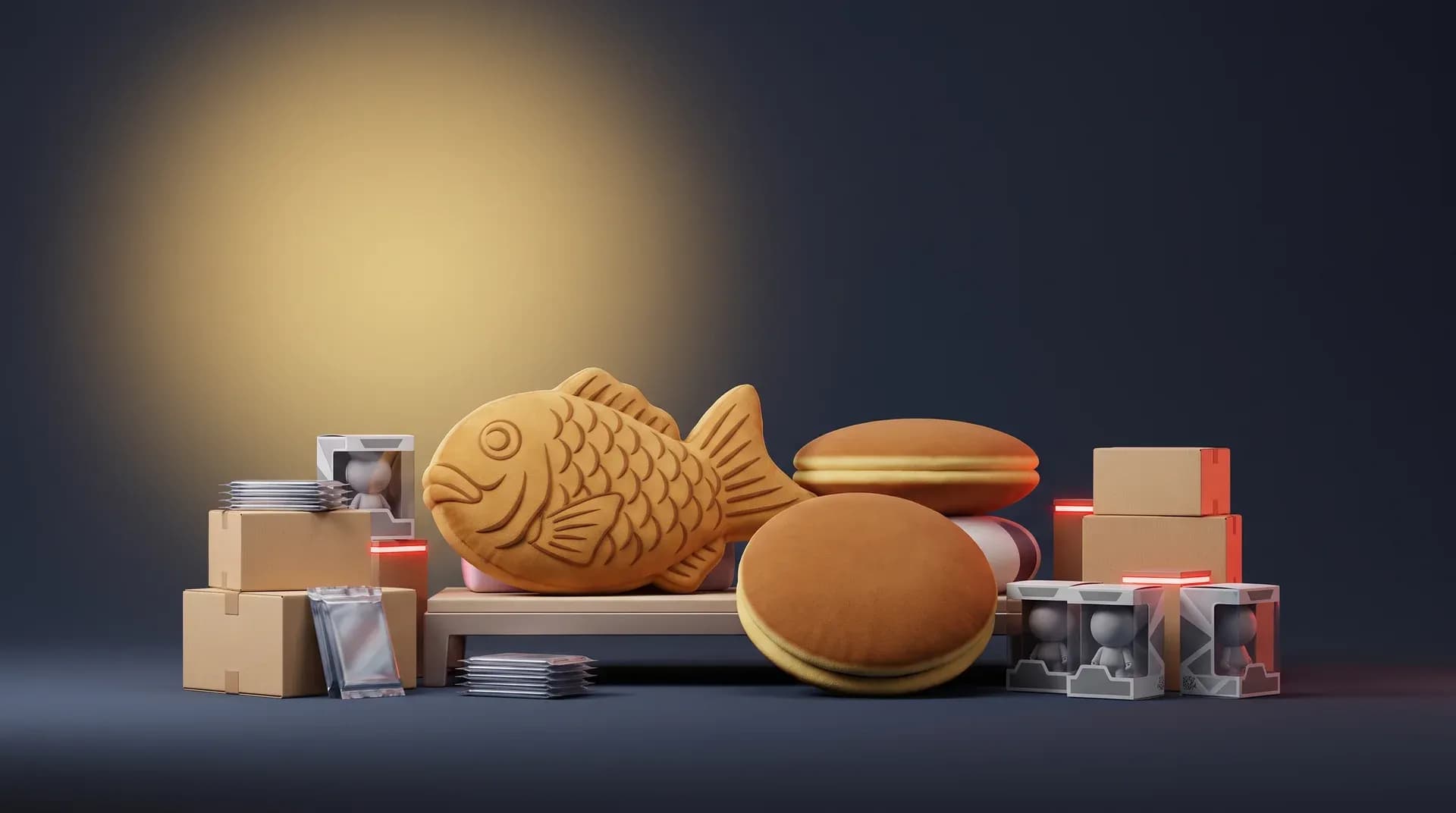
Nitori's Mochimochi Cushion series has now passed 4.9 million cumulative units sold, and the newest additions — a taiyaki and a waffle — went on sale in early October 2026 at select Nitori stores and on Nitori Net (Holiday Travel). For collectors of Japanese food-culture goods, these are the rare case of a mass-market home item that is genuinely well-observed: the shapes, baked colors and textures are reproduced from real wagashi rather than generic plush patterns. This guide covers what the line actually is, how the new designs differ, and how to think about condition and care if you plan to keep them long term.
What the Mochimochi Cushion line actually is
Mochimochi means "squeezably soft," and that is the design brief. Nitori has applied wagashi styling to cushions across a range of Japanese sweets, and the series has been well received enough that cumulative sales have passed 4.9 million units (Holiday Travel). Before the current pair, Nitori sold cushions modeled on a variety of foods, including meat buns, chestnut manju and dorayaki (Holiday Travel).
The dorayaki and kuri manju cushions have been around for a while, while the taiyaki and waffle versions are the newest additions to the lineup (SoraNews24). That distinction matters if you are building a set: two of the four designs are established staples, and two are the current release window.
The two new designs, in detail
The Mochimochi Cushion Waffle (product code WF001) measures approximately 40 cm wide by 22 cm deep by 23 cm high and is priced at ¥1,990 including tax (Holiday Travel). Nitori describes it as a plump cushion offering different textures in the waffle base and the cream, and its horizontally long shape means it can double as a makeshift pillow for relaxing in the living room (Holiday Travel).
The Mochimochi Cushion Taiyaki (product code TY001) is approximately 52 cm wide by 30 cm deep by 12 cm high and priced at ¥1,490 including tax (Holiday Travel). Nitori says it carefully recreates the taiyaki's distinctive shape, its appetizing baked color and even its expression, with a plump, moderate volume in a size that is easy to use (Holiday Travel). Note that these are Japanese retail prices from the source, not KADO Japan prices — check the product page before buying.
The taiyaki itself is a pancake-like cake baked on a special grill into the shape of a fish, filled with sweet red beans or other sweet fillings, and it is one of Japan's most beloved wagashi varieties (SoraNews24). The dorayaki cushion draws on the sandwiched sweet of two circular cakes with sweet red beans between them, and the kuri manju cushion is modeled on a steamed cake with chestnut filling — kuri manju are often oblong with the kanji character for kuri (栗) seared into the dough, and Nitori follows both cues (SoraNews24).
Why the waffle is the interesting one for collectors
The waffle is the arguable entry in the set, and that is precisely what makes it worth thinking about. Waffles are not an indigenous part of Japanese cuisine. But in Japan, "waffles" are often smaller, softer and folded around some sort of creamy filling rather than being large enough to eat with a knife and fork, cooked crisp and drizzled with maple syrup (SoraNews24).
So the waffle cushion sits at the edge of the wagashi theme rather than squarely inside it. If you collect Japanese sweets goods specifically, the taiyaki, dorayaki and kuri manju are the culturally anchored pieces. If you collect the Mochimochi line as a line, the waffle is the one that documents how Nitori thinks about the category — and it is the newest, which usually means the shortest shelf history.
The developer's own account of how they were made
Nitori's developer comment is unusually specific and worth quoting for anyone who cares about how a mass-produced cushion gets its look. The team says the series is developed out of a wish to deliver cushions that are fun to look at and soothing to touch, and that using real waffles and taiyaki as references, they went through repeated prototypes to reproduce features such as the shape, baked color and texture, focusing on a plump finish (Holiday Travel).
That is the collector-relevant part: the baked color and surface texture were iterated against physical reference sweets, not drawn from a style guide. Nitori also says it plans to keep developing products that make daily life more convenient and comfortable, which suggests the line will continue rather than close (Holiday Travel).
Availability, and what is not yet known
Both new designs have been on sale since early October 2026 at select Nitori stores and on Nitori Net (Holiday Travel). Two caveats are stated plainly by the source: additional fees apply for purchases or deliveries to some remote islands, and availability may vary by store (Holiday Travel).
What is not yet known, and worth checking directly, is the production run for either new design, whether Nitori will issue seasonal colorways, and whether the taiyaki and waffle will remain in continuous production the way the dorayaki and kuri manju have. The source material does not state any of this. If you are deciding whether to buy now or wait, the honest answer is that the published information covers price, size, codes and the October 2026 release — nothing about future runs. Verify on the Nitori Net product pages before ordering.
Condition, care and storage for long-term keeping
Because these are soft goods, condition is everything. The two things that degrade a plush cushion fastest are compression and surface soiling, and both are manageable. Rotate which cushion takes daily weight rather than leaving one in a chair permanently, and keep the taiyaki's baked-color surface out of prolonged direct sun, since fading on a dyed textile is not reversible.
For cleaning, treat the waffle and taiyaki as you would any filled cushion: spot-clean the surface rather than soaking the whole piece, and avoid anything that would mat the pile. The source material does not specify a washing method for these two designs, so check the care label on the item itself rather than assuming. For storage, keep them somewhere dry and out of compression — a shelf rather than a vacuum bag, since flattening a plump cushion defeats the entire point of the design.
How to choose between the four designs
If you want the most recognizably Japanese piece, the taiyaki is the anchor: it is one of Japan's most beloved wagashi varieties, and the cushion reproduces its shape, baked color and expression (SoraNews24). At roughly 52 by 30 by 12 cm it is wide and flat, which suits a sofa back or a bench.
If you want something that works as an actual pillow, the waffle's horizontally long 40 by 22 by 23 cm form is the more functional shape, and Nitori explicitly notes it can double as a makeshift pillow (Holiday Travel). The dorayaki and kuri manju remain the established, longer-running designs if you prefer to start with the pieces that have been in the lineup longest (SoraNews24).
For gift-giving, the taiyaki is the safest read for someone who knows Japanese food, and the waffle is the safer read for someone who does not. Both are inexpensive enough at Japanese retail that a pair is a reasonable way to cover both.
Sources
- https://soranews24.com/2026/10/10/giant-wagashi-cushions-will-turn-your-home-sweet-home-into-home-sweet-japanese-sweets-home/
- https://www.haveagood-holiday.com/en/articles/nitori-mochimochi-waffle-taiyaki-cushions