Buying Japanese Collectibles: High-End Figures and Blu-rays
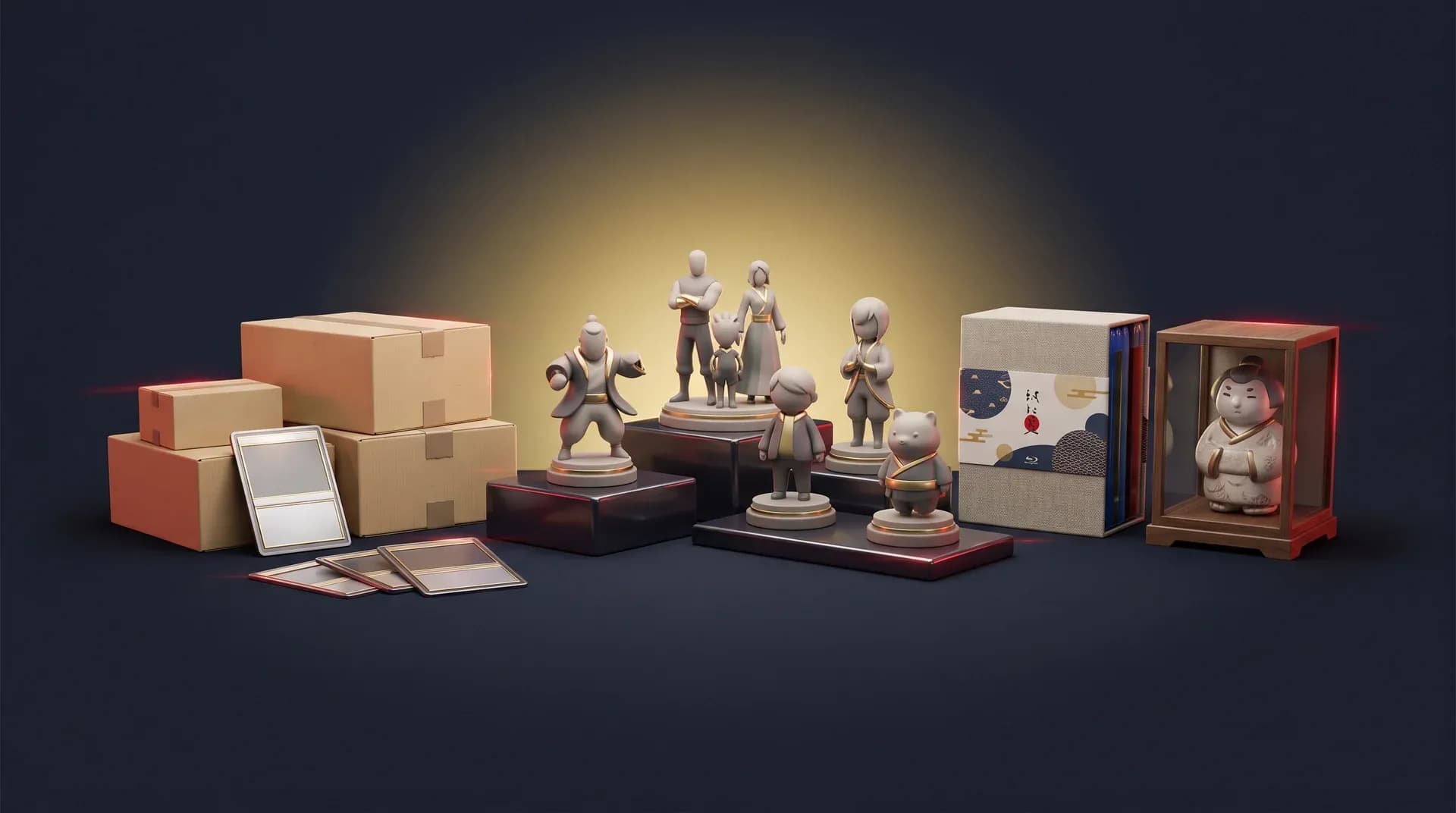
A single Sonic the Hedgehog figure now costs 1 million yen because it is crafted from Arita-ware Japanese porcelain. This is not a standard PVC statue; it is a piece of traditional Japanese art. When buying Japanese collectibles, the value often shifts from the character's popularity to the craftsmanship of the medium. For the serious collector, the goal is no longer just owning a character, but owning a specific iteration of that character that exists only within a Japanese cultural context.
This guide is for collectors who have moved past mass-market prize figures and are now targeting high-end art pieces, limited physical media, and exclusive franchise collaborations. Whether you are hunting for a luxury porcelain Sonic or a rare UHD Blu-ray release, the process requires a shift in how you track availability and verify authenticity.
Why It Matters Right Now
!Why It Matters Right Now visual for Buying Japanese Collectibles: High-End Figures and Blu-rays Figure 1: Why It Matters Right Now

The market for physical media and luxury character goods is currently seeing a resurgence in exclusivity. For example, Madoka Magica -Walpurgisnacht: Rising- is seeing new single UHD BD releases on October 15. These windows are narrow. If you miss the initial release cycle for high-bitrate physical media, you are often forced into the secondary market where prices inflate based on scarcity rather than value.
Simultaneously, we are seeing a trend of "traditional craft" crossovers. The Arita-ware Sonic figure mentioned by SoraNews24 represents a move toward luxury collectibles that appeal to art collectors as much as gamers. These items are produced in extremely low quantities. Waiting six months to buy these items usually means they are gone from official retail and available only through high-premium proxies. To successfully navigate this, you need to integrate these announcements into your [Anime Collectibles Guide: Tracking 2026-2027 Releases](/blog/anime-collectibles-guide-tracking-2026-2027-releases) strategy immediately.
The Play: Step-by-Step
!The Play: Step-by-Step visual for Buying Japanese Collectibles: High-End Figures and Blu-rays Figure 2: The Play: Step-by-Step

Securing high-end items requires a different workflow than buying a standard figure from a retail site. Follow these steps to secure authentic, high-value Japanese goods.
- Monitor Official Press Releases for Medium-Specific Drops.
- Set up automated feeds. Use Google Alerts, RSS readers (Feedly), and a Discord bot that scrapes Anime News Network, SoraNews24, and the official websites of studios (e.g., Aniplex, Kadokawa). Aim for at least three distinct sources so you catch regional announcements that might not be cross‑posted.
- Create a tracking spreadsheet. Columns should include Date, Source, Product Name, Medium (porcelain, metal, UHD Blu‑ray), Limited Edition Code, Pre‑order Window, and Link to Order Form. Populate this within 15 minutes of each discovery.
- Example: On 2026‑10‑07 MediaOCD announced a partnership with Aniplex of America. By logging this, you know that any Aniplex‑produced UHD Blu‑ray slated for Q1 2027 will appear on MediaOCD’s portal within two weeks, giving you a head‑start over generic resellers.
- Verify the Material and Production Method.
- Research craft terminology. Terms like "Arita‑yaki," "Mino‑yaki," "kintsugi‑finished," or "hand‑painted enamel" each carry distinct price brackets. A quick Wikipedia or Japanese Wikipedia (ja.wikipedia.org) lookup will reveal typical production runs (often 100–300 pieces for Arita‑yaki) and the expected price per piece.
- Check certification. Luxury porcelain items frequently include a small certificate of authenticity (COA) signed by the master potter. Request a high‑resolution scan of the COA before committing to purchase.
- Storage implications. Porcelain should be kept at 18‑22 °C with relative humidity of 45‑55 %. PVC figures can tolerate a wider range but are vulnerable to UV‑induced yellowing after 3–5 years. Budget for a climate‑controlled display cabinet (≈¥30,000) if you plan to own multiple high‑value pieces.
- Cross‑Reference Release Dates with Regional Screenings.
- Create a master calendar. Input theatrical release dates, Japanese home‑video release dates, and any associated exhibition events (e.g., a museum pop‑up featuring the figure). Use a tool like Google Calendar with alerts set 7 days before each pre‑order deadline.
- Case study: The Madoka Magica screenings in North America run January 16‑19, 2027. Historically, the UHD Blu‑ray drops in Japan a week after the final screening, then appears on international platforms within 14 days. By marking Jan 26 as the expected Japanese release, you can pre‑order on the day the stock opens, avoiding the 30‑% price hike seen on secondary markets.
- Audit the Distributor's Authenticity Chain.
- Obi‑strip verification. The Obi strip contains the barcode, price, and a Japanese language description. For a 1 million ¥ figure, the Obi will also list the limited edition number (e.g., "No. 12/100"). Request a photo of the Obi before purchase; a missing strip is a red flag.
- Seller reputation scoring. Rate each seller on a 1‑5 scale based on: (a) official partnership proof, (b) customer reviews on Japanese forums (e.g., 2chan, Reddit r/animecollectors), (c) response time to authenticity queries, and (d) shipping insurance options. Only transact with sellers scoring 4 or above.
- Example audit: A third‑party seller on Rakuten lists the Sonic Arita‑ware figure but provides only a blurry product photo and no Obi image. Their score drops to 2; you would bypass them in favor of a verified gallery in Osaka that provides a full COA and Obi scan.
- Calculate Total Landed Cost Including Customs.
- Step‑by‑step calculator:
- Convert JPY to your local currency using the current rate (e.g., 1 JPY = 0.0075 USD). 1,000,000 JPY → $7,500.
- Determine import duty. Many countries charge 0 % for art objects but 8‑10 % for "toys" and 5 % for "media". For a porcelain figure, assume 0 % duty; for a Blu‑ray, assume 5 %.
- Add consumption tax (e.g., 10 % VAT in EU). $7,500 × 0.10 = $750.
- Estimate shipping. Standard air freight for a 5 kg package from Osaka to Los Angeles is ≈¥15,000 ($112). Insurance at 1 % of value adds $75.
- Total landed cost = $7,500 + $750 + $112 + $75 = $8,437.
- Budget buffer. Always add a 5‑10 % contingency for exchange‑rate fluctuations; in this example, an extra $500 ensures you won’t be caught off‑guard.
- Secure Shipping with Specialized Packaging.
- Packaging checklist:
- Double‑wall corrugated box (minimum 0.5 in thickness).
- Four layers of bubble wrap (minimum 1 in total thickness) around the figure.
- Custom foam inserts cut to the exact shape of the item (especially important for delicate porcelain).
- "Fragile – Handle with Care – This Side Up" stickers in both English and Japanese.
- Insurance policy. Choose a carrier that offers declared‑value insurance. For a $7,500 item, a $10,000 policy costs roughly $30‑$45. Verify that the carrier’s liability limits exceed the item’s value.
- Tracking and signature. Require a tracking number with real‑time updates and a signature‑on‑delivery requirement. This reduces the risk of loss or theft during the final mile.
- Post‑Arrival Authentication & Documentation.
- Condition report. Within 24 hours of receipt, photograph the item from all angles, capture the Obi strip, COA, and any serial numbers. Note any imperfections (e.g., minor chip, dust) in a written log.
- Third‑party appraisal. For items over ¥500,000, consider a professional appraisal from a Japanese art specialist (e.g., Tokyo’s Japan Craft Association). A written appraisal can boost resale value later.
- Digital archiving. Store all images, receipts, and appraisal PDFs in a cloud folder labeled "2026‑Collectibles" with subfolders for "Figures" and "Blu‑rays".
Real-World Example
Here is what this looks like in practice: Consider a collector targeting the luxury Sonic the Hedgehog Arita‑ware figure. Instead of searching general marketplaces, the collector monitors SoraNews24 for the initial announcement.
- Day 0 – Announcement detection. The collector receives an automated Discord alert at 09:13 JST. They open the article, note the release date (2026‑11‑15), and copy the product code (SONIC‑AR‑001).
- Day 1 – Spreadsheet entry. They add a row to their tracking sheet: 2026‑11‑15 | SoraNews24 | Sonic Arita‑ware figure | Porcelain | Pre‑order 2026‑10‑20 – 2026‑10‑27 | Link: https://example‑store.jp/sonic‑aritaware.
- Day 3 – Material research. A 30‑minute deep‑dive on "Arita‑yaki" reveals that the figure is hand‑painted by master potter Kiyoshi Tanaka, limited to 150 pieces, each numbered. The collector orders a climate‑controlled glass cabinet (¥28,000 ≈ $210) from a Tokyo retailer, budgeting the extra cost.
- Day 5 – Distributor verification. They locate the official distributor, "Arita Artworks Co.," and request a PDF of the COA. The COA confirms the figure’s authenticity and includes the master’s signature.
- Day 7 – Cost calculation. Using the step‑by‑step calculator:
- Base price: ¥1,000,000 → $7,500.
- Import duty: 0 % (art object).
- VAT (US): 0 % (no sales tax on imported art if shipped directly to a personal address).
- Shipping: ¥20,000 ($150) for air freight with insurance.
- Total landed cost: $7,650.
- Contingency (5 %): $382 → Final budget $8,032.
- Day 9 – Pre‑order placement. The pre‑order window opens. The collector fills out the Japanese order form (using Chrome’s auto‑translate), uploads the COA, and selects "double‑boxing + insurance". The total checkout amount displayed is ¥1,120,000 ($8,400) including shipping and insurance.
- Day 15 – Shipping confirmation. The seller provides a tracking number (FedEx) and a photo of the double‑boxed item with the Obi strip visible. The collector notes the expected delivery date (2026‑12‑02).
- Day 22 – Arrival & inspection. The package arrives, signature obtained. The collector opens the outer box, then the inner box, and finds the figure pristine, Obi strip intact, and COA sealed. They photograph the item, upload images to their cloud archive, and log a condition report noting "No chips, dust‑free".
- Day 30 – Appraisal. They send the figure to the Japan Craft Association. The appraisal certifies a market value of ¥1,200,000 ($9,000) as of 2027‑01‑01, confirming that the purchase price was within market expectations.
The entire process, from the first news alert to the figure sitting safely in a climate‑controlled display, takes roughly three weeks and costs about $8,032. The collector now owns a museum‑grade piece that will likely appreciate, whereas a mass‑produced PVC Sonic would have depreciated by 30‑40 % in the same period.
Caveats
This isn't a game for "blind box" hunters or those looking for a quick flip. High-end collecting is a capital-intensive endurance test. You will frequently encounter news reports for 1 million yen figures that lack a "Buy Now" button; this is by design. To secure these, you must be comfortable navigating Japanese-language inquiry forms or establishing relationships with specialized galleries in regions like Saga or Tokyo.
There is also a significant platform risk: the chu-ken (lottery) system. In Japan, the highest-tier collectibles are often allocated via lottery. Having the funds is only half the battle; you may still be denied the right to purchase. This is a systemic reality that mainstream news sources often gloss over.
Finally, timelines are volatile. A luxury porcelain piece may take months of kiln-firing and hand-painting before shipping, while a UHD Blu‑ray release like Madoka Magica has a razor-thin window of primary availability before it vanishes into the secondary market's price-gouging cycle.
Action Items
- Set up a Google Alert for "Arita‑ware" and "Limited Edition UHD Blu‑ray" to catch luxury drops before they hit resellers.
- Review the [Buy Authentic Japanese Collectibles: 2026 Release Guide](/blog/buy-authentic-japanese-collectibles-guide) to align your budget with upcoming high‑end releases.
- Create a dedicated shipping profile with your preferred proxy or distributor that mandates double‑boxing and full insurance for any item over 100,000 JPY.
Join our community for more direct insights into the Japanese market at /newsletter.
Frequently Asked Questions
How much does a luxury Japanese figure cost?
Prices vary wildly based on material. While standard figures are affordable, luxury art pieces can reach extreme prices, such as the Sonic the Hedgehog Arita‑ware figure which costs 1 million JPY.
Is it better to buy UHD Blu‑rays or standard Blu‑rays?
For collectors, UHD (Ultra High Definition) releases are preferred for their superior bitrate and image quality. Limited UHD releases, such as those for Madoka Magica, typically hold higher long‑term collector value than standard editions.
How do I know if a Japanese Blu‑ray is authentic?
Check for the presence of the Obi strip, which is the paper wrap around the spine of the case. Authentic Japanese releases almost always include this; its absence often indicates a bootleg or a heavily used secondary market copy.
What is Arita‑ware?
Arita‑ware (Arita‑yaki) is a traditional Japanese porcelain from the Arita region. When used in collectibles, it transforms a character figure into a piece of fine art, significantly increasing the price and the required care for storage.
Related reading
- [Collecting Japanese Anime Blu-rays and Art Cards](/blog/collecting-japanese-anime-blu-rays-art-cards)
- [Starbucks Japan Pokémon Collaboration: Collector Buying Guid](/blog/starbucks-japan-pokemon-collaboration-collector-guide)
- [Starbucks Japan Pokémon Goods: Collector Buying Guide](/blog/starbucks-japan-pokemon-goods-guide)